
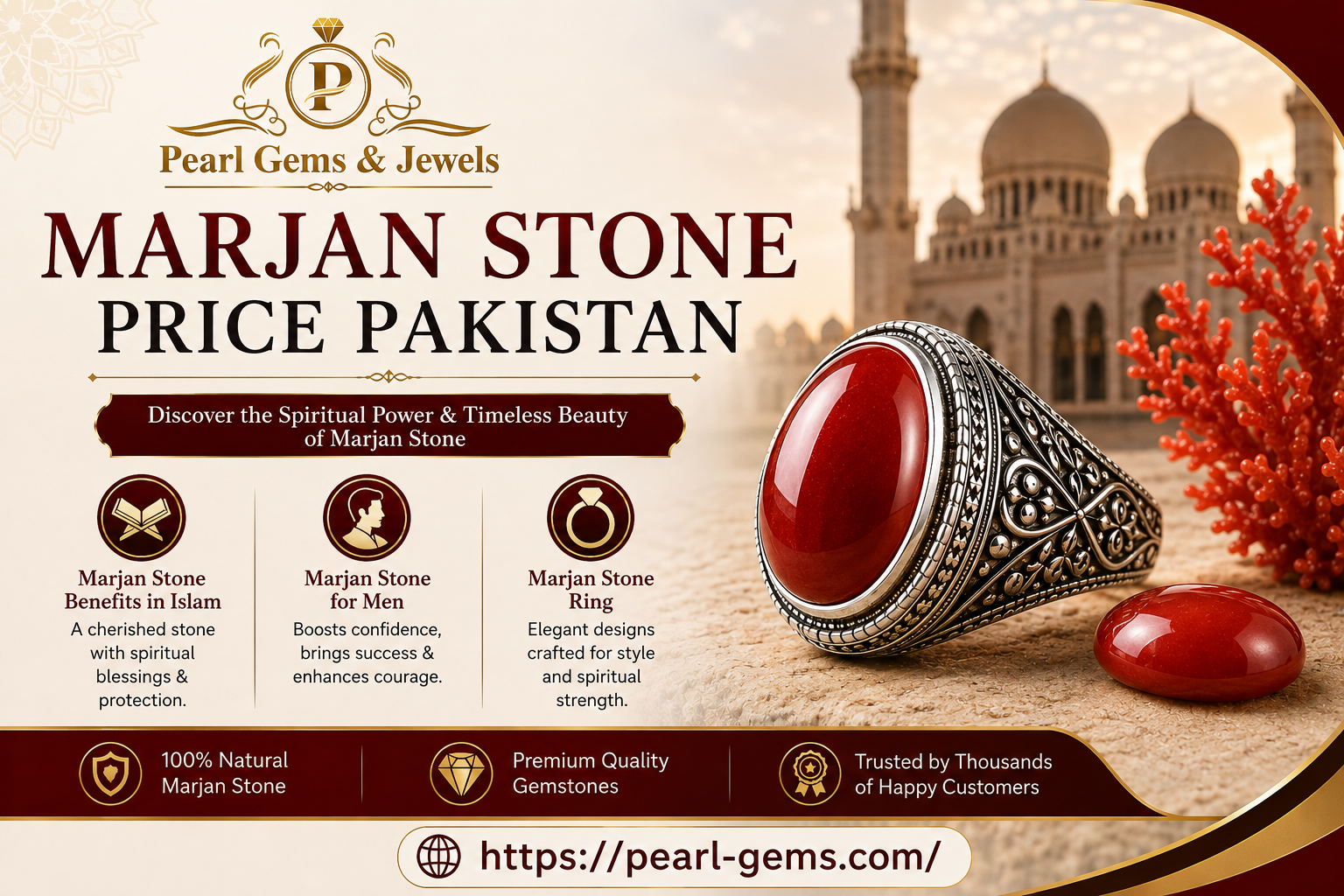
Marjan stone price in Pakistan can range from a few thousand rupees to well over Rs. 50,000 per carat, depending on origin, color, weight, and treatment. If you’re planning to buy this stone for a ring or pendant, understanding what actually drives the value will help you avoid overpaying and spot genuine pieces before you buy. In this guide, we break down current price ranges, the factors that affect Marjan stone price, and where to find authentic stones in Pakistan.
What Is Marjan Stone?
Marjan, known in English as red coral, is an organic gemstone formed from the calcified skeletons of marine coral polyps. Unlike mined stones such as Neelam or Pukhraj, Marjan grows slowly on ocean beds over decades, which is part of why fine, natural pieces carry real value in the market.
The stone also holds a special place in Islamic tradition. The word “Marjan” appears in the Holy Quran in Surah Ar-Rahman, mentioned alongside pearls (Lu’lu) as one of the precious things that emerge from the sea. This scriptural connection is one reason Marjan has remained popular among Muslims in Pakistan for generations, often worn set into a ring or pendant.
Marjan Stone Price Pakistan (2026)
Marjan stone price in Pakistan typically falls within the following broad ranges. Exact pricing depends on the quality factors covered later in this guide, so treat these as a general reference point rather than a fixed rate.
| Type / Origin | Approximate Price (Per Carat) |
|---|---|
| Natural Yemeni Marjan (fine grade) | Rs. 15,000 – Rs. 50,000+ |
| Natural Italian Marjan | Rs. 10,000 – Rs. 30,000 |
| Mediterranean Marjan (standard grade) | Rs. 5,000 – Rs. 15,000 |
| Taiwan / Pacific Marjan | Rs. 2,000 – Rs. 8,000 |
| Treated or dyed Marjan | Rs. 500 – Rs. 3,000 |
These figures are indicative averages and can shift with import costs, seasonal demand, and gram-to-carat conversion differences between sellers. For an accurate, up-to-date Marjan stone price in Pakistan, it’s always best to check with a trusted jeweler directly rather than relying on generic estimates found online.
Factors That Affect Marjan Stone Price in Pakistan
Origin
Where a Marjan stone comes from has one of the biggest effects on its price. Yemeni Marjan is widely considered the finest and most sought-after, prized for its deep, even red tone and dense structure. Italian Marjan is also well regarded, while Mediterranean and Pacific-origin stones are more commonly available and priced more affordably, making them a practical entry point for first-time buyers.
Color and Clarity
Color is the single most visible factor buyers judge a Marjan stone by. Deep, uniform red or blood-red tones command the highest prices, while paler pink or orange-tinted stones are generally valued lower. Clarity matters too — stones with visible white veining, holes, or surface pitting are priced lower than smooth, evenly colored pieces, even if the origin is the same.
Weight (Carat / Ratti)
As with most gemstones, larger Marjan stones are rarer and priced disproportionately higher per carat than smaller ones. In Pakistan, weight is often quoted in ratti alongside carat, so it’s worth confirming which unit a seller is using before comparing prices, since the two aren’t interchangeable.
Treatment – Natural vs. Treated
Natural, untreated Marjan always commands a premium over dyed or treated stones. Some sellers dye pale coral to mimic the deep red of premium Yemeni Marjan, which can look convincing but sells for a fraction of the price. Asking for a certificate of authenticity, where available, is the safest way to confirm you’re paying for a genuinely natural stone.
Types of Marjan Stone Available in Pakistan
Buyers in Pakistan will typically come across a few recognizable categories of Marjan stone:
- Surkh Marjan (deep red coral) — the most valuable and widely requested type, known for its rich, saturated color.
- Gulabi Marjan (pink coral) — a softer, lighter variety, generally more affordable and popular for smaller pieces.
- Branch or raw-cut Marjan — less processed pieces, often used in traditional jewelry designs.
- Polished round or oval-cut Marjan — the standard cut used for rings and pendants, offering a smooth, uniform finish.
Each type carries a different price point, which is why it helps to know exactly which variety you’re being quoted for before comparing offers between sellers.
How Marjan Stone Price Compares to Other Gemstones in Pakistan
If you’re weighing Marjan against other popular gemstones before you buy, it helps to see where it sits on the price spectrum. Neelam (blue sapphire) and Pukhraj (yellow sapphire) are mined stones, so their price is driven mainly by clarity and origin rather than the organic growth factors that affect coral — and fine natural pieces of either can significantly exceed premium Yemeni Marjan in price per carat. Aqeeq, by contrast, is generally more affordable than Marjan across most grades, which is part of why it remains a popular everyday choice.
Marjan tends to sit in the middle of this range: more accessible than top-grade Neelam or Pukhraj, but priced higher than standard Aqeeq once you factor in natural, untreated, fine-color pieces. This middle position is one reason Marjan stone price in Pakistan has stayed fairly stable in demand — it offers genuine rarity and religious significance without the price ceiling of the rarer mined stones.
Caring for Your Marjan Stone
Because Marjan is an organic gemstone rather than a mined mineral, it needs a bit more care than harder stones like Neelam or Pukhraj to hold its color and value over time. A few simple habits go a long way:
- Avoid perfumes, oils, and chemicals. Coral is porous, and direct contact with perfume, lotion, or cleaning agents can dull its color over time.
- Remove it before swimming or bathing. Chlorinated or heavily soaped water can affect the surface finish of natural coral.
- Store it separately. Marjan is softer than most gemstones, so keeping it away from harder stones in your jewelry box prevents scratching.
- Wipe gently after wear. A soft, dry cloth is enough — avoid ultrasonic cleaners, which are too harsh for organic gemstones.
Stones that are properly cared for tend to hold their color and resale value far better, which matters if you’re buying Marjan partly as a long-term piece rather than a one-off purchase.
Marjan Stone Benefits in Islamic and Folk Tradition
Beyond its market value, Marjan stone carries meaning that goes back generations in Islamic and South Asian folk tradition. Many people in Pakistan wear Marjan believing it brings a sense of protection and inner calm, and it is often passed down as a family piece rather than bought purely as an investment.
In folk belief, Marjan is also associated with courage and emotional steadiness, and some wear it as a reminder of humility given its Quranic mention alongside pearls as a gift from the sea. These associations are part of long-standing cultural and folk tradition rather than scientific claims, and most buyers in Pakistan value the stone as much for this heritage as for its appearance.
How to Identify Genuine Marjan Stone
With demand for Marjan stone price in Pakistan trending upward, imitation and treated stones have become more common. A few practical checks can help before you buy:
- Check the surface texture. Genuine Marjan often shows fine, natural growth lines under close inspection, while plastic or glass imitations look unnaturally smooth and uniform.
- Test the weight. Natural coral feels denser than plastic or resin lookalikes of a similar size.
- Be cautious of “too perfect” color. An evenly saturated, glossy red across the entire piece with zero variation is often a sign of dyeing.
- Buy from a seller who can explain origin and treatment. A trustworthy jeweler will tell you plainly whether a stone is natural, treated, or a composite, rather than avoiding the question.
- Ask for a certificate where possible. It isn’t always available for lower-priced pieces, but for higher-value Yemeni or Italian Marjan, it’s a reasonable ask.
Where to Buy Marjan Stone in Pakistan at the Best Price
If you’re looking to buy genuine, natural Marjan stone at a fair price, browse our Marjan stone collection, where each piece is listed with its origin, weight, and treatment status clearly stated. If you’re weighing Marjan against other popular options, our Aqeeq stone and Neelam stone pages are worth comparing before you decide. For those specifically shopping for a wearable piece, our Marjan stone rings are cut and set for daily use.
Frequently Asked Questions
What is the average Marjan stone price in Pakistan? Marjan stone price in Pakistan generally ranges from Rs. 2,000 to Rs. 50,000+ per carat, depending on origin, color, and whether the stone is natural or treated. Yemeni and Italian Marjan sit at the higher end of this range.
Is Yemeni Marjan more expensive than other types? Yes, Yemeni Marjan is typically the most expensive due to its deep red color and dense structure. It’s widely regarded as the benchmark for quality among Marjan stone buyers in Pakistan.
How can I tell if my Marjan stone is real? Check for natural surface texture, weight, and slight color variation. Plastic or dyed imitations tend to look unnaturally uniform and feel lighter than genuine coral.
Does Marjan stone price change with weight? Yes, larger stones are priced higher per carat, not just in total, since bigger natural pieces without flaws are significantly rarer to find.
Is Marjan stone suitable for men’s rings? Yes, Marjan is a popular choice for men’s rings in Pakistan, often set in silver, due to both its appearance and its cultural and religious significance.
Is Marjan stone more expensive than Aqeeq? Generally, yes. Natural, fine-color Marjan is usually priced higher than standard Aqeeq, though both remain more affordable than premium Neelam or Pukhraj.
Does treated Marjan stone have any resale value? Treated or dyed Marjan holds far less resale value than natural stone, since its color can fade or shift over time. Buyers looking for long-term value should prioritize natural, untreated pieces.
Conclusion
Marjan stone price in Pakistan depends on a combination of origin, color, weight, and treatment, with natural Yemeni and Italian stones commanding the highest value. Knowing these factors before you shop means you can judge whether a quoted price is fair and avoid paying premium rates for a treated or imitation piece. If you’re ready to buy, explore our Marjan stone collection for authentic, clearly labeled pieces, or reach out to our team directly for a personalized price quote based on the exact stone you have in mind.