

Introduction: The Timeless Treasure of the Sea
Imagine holding a gemstone born not from rocks and pressure, but from a living creature—a miracle of nature that has captivated humanity for over 6,000 years. This is the magic of pearl gemstone, the only gem created by a living organism and the official birthstone for June . In Pakistan, the allure of pearl stone runs deep, from the historic pearl diving traditions of Sindh to the modern jewelry markets of Karachi and Lahore.
At Pearl Gems Pakistan, we’ve witnessed the enduring fascination with pearls across our country. Whether you’re a bride in Islamabad seeking traditional jewelry, a collector in Lahore building an investment portfolio, or a fashion-conscious professional in Karachi looking for elegant accessories, understanding pearl gemstone types, quality, and pricing is essential for making informed decisions.
This comprehensive natural pearl gemstone guide will walk you through everything you need to know about these organic treasures. By the end, you’ll understand why pearl stone remains one of the most cherished gems in Pakistani culture and how to choose the perfect one for your needs.
Chapter 1: What Is Pearl Gemstone? Nature’s Living Miracle
The Science of Pearl Formation
Unlike diamonds or rubies formed deep within the earth, pearl gemstone is created inside living mollusks—oysters and mussels that live in oceans, rivers, and lakes . The process is nothing short of miraculous:
How Nature Creates Pearls:
-
The Irritant: A foreign object—sometimes a parasite, piece of shell, or organic material—enters the mollusk’s soft tissue . Contrary to popular belief, a grain of sand is rarely the cause .
-
The Defense Mechanism: To protect itself from this irritant, the mollusk secretes a substance called nacre (pronounced “nay-ker”), also known as mother-of-pearl . This silky material coats the intruder layer by layer.
-
The Formation: Over months or years, these concentric layers of nacre build up, eventually forming a pearl stone. The process is identical to how the mollusk lines its own shell .
-
The Result: The final pearl gemstone consists of calcium carbonate (mainly aragonite) held together by an organic compound called conchiolin .
Physical Properties of Pearl Stone
Understanding the physical characteristics helps explain why pearl gemstone requires special care:
-
Hardness: 2.5 to 4.5 on the Mohs scale—much softer than most gemstones
-
Chemical Composition: Calcium carbonate (CaCO₃) with conchiolin
-
Specific Gravity: 2.60–2.85
-
Luster: Unique pearlescent glow from light reflecting off nacre layers
-
Sensitivity: Dissolves in vinegar and other acids; sensitive to heat and chemicals
The Meaning of “Pearl”
The word itself tells a story. “Pearl” comes from the Old French perle, derived from the Latin perna meaning “leg”—referring to the leg-of-mutton shape of an open mollusk shell . Because perfectly round, smooth, natural pearl gemstone is so uncommon, the word has come to represent anything rare and valuable
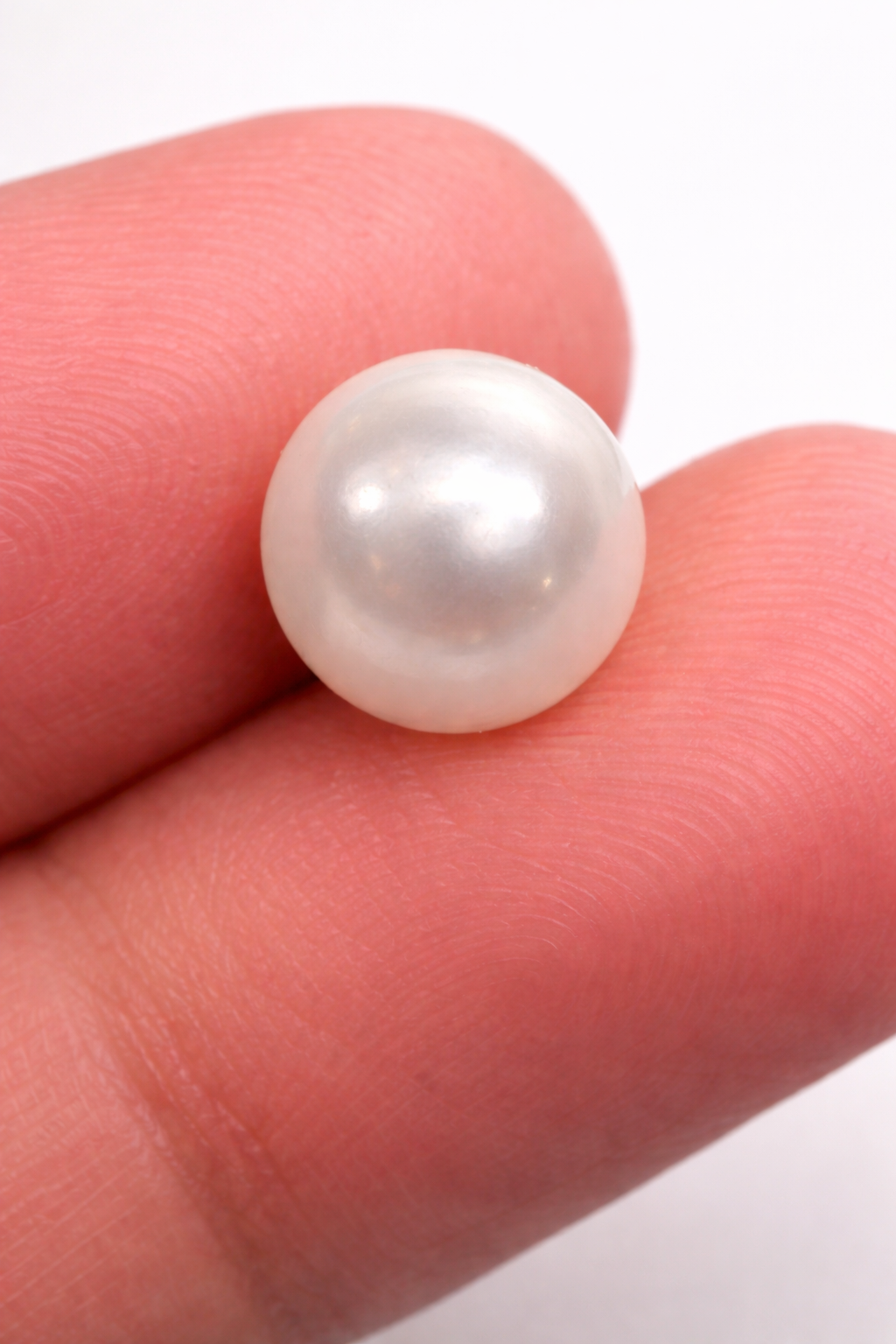
Chapter 2: Natural vs. Cultured Pearls – Understanding the Difference
Natural Pearls: The Rarest Treasure
Before the 20th century, all pearl gemstone was natural—formed completely by chance in the wild without human intervention . Divers would risk their lives hunting for these treasures in the Persian Gulf, Indian Ocean, and other waters.
Characteristics of Natural Pearls:
-
Formation: Entirely accidental; no human involvement
-
Rarity: Exceptionally rare—finding one wild pearl requires opening many hundreds of oysters
-
Composition: Nearly 100% calcium carbonate and conchiolin
-
Availability: Today, most natural pearl stone is found only in antique jewelry or museums
-
Price: Can start at $500 and exceed $100,000 for exceptional specimens
Historical Significance:
Natural pearls were once reserved for royalty and the extremely wealthy. In 1917, jeweler Pierre Cartier paid for his Fifth Avenue mansion with a single strand of natural pearl gemstone valued at $1 million . Cleopatra famously crushed a priceless pearl earring into wine and drank it to win a bet with Marc Antony .
Cultured Pearls: Making Pearls Accessible
In 1893, Japanese entrepreneur Kokichi Mikimoto revolutionized the pearl world by successfully culturing the first pearl gemstone under human supervision . Today, over 99% of pearls sold worldwide are cultured .
How Cultured Pearls Are Made:
-
A skilled technician implants a small piece of mantle tissue (and sometimes a bead nucleus) into a host mollusk
-
The mollusk responds by secreting nacre around the implant
-
After 2-7 years, a cultured pearl stone is harvested
Important Truth: Cultured pearls are real pearls—they’re just formed with human assistance rather than by pure accident. They have the same chemical composition and beauty as natural pearls .
The Pakistani Market Reality
At Pearl Gems Pakistan, we’re transparent with our customers: almost all pearl gemstone available today, including our collection, is cultured. True natural pearls are museum-quality rarities that few people will ever encounter in the marketplace. Understanding this helps you appreciate the value of high-quality cultured pearl stone without unrealistic expectations.
Chapter 3: Types of Pearl Gemstone – A Complete Classification
By Environment: Freshwater vs. Saltwater
The most fundamental classification of pearl gemstone depends on where they grow:
Freshwater Pearls
Freshwater pearl gemstone grows in mussels living in lakes, rivers, and ponds . Most of the world’s freshwater pearls come from China .
Characteristics:
-
Produced in mussels (not oysters)
-
Each mussel can produce multiple pearls (up to 30 or more)
-
Growth time: 6 months to several years
-
Shape variety: Wide range, including baroque and near-round
-
Color variety: Extensive, including pastels like lavender, pink, and peach
-
Price: Most economical pearl variety
In Pakistan: Freshwater pearl stone is widely available and affordable, with strands ranging from PKR 2,000 to PKR 5,000 . These are excellent for everyday jewelry and fashion pieces.
Saltwater Pearls
Saltwater pearl gemstone grows in oysters living in oceans and seas. These are generally more valuable than freshwater varieties .
Key Differences from Freshwater:
-
Each oyster typically produces only one pearl at a time
-
Longer cultivation periods (years rather than months)
-
Stricter quality control
-
Higher production costs
-
Generally more expensive
Major Saltwater Pearl Types
Akoya Pearls
Akoya pearl gemstone is the classic pearl most people imagine—perfectly round with mirror-like luster .
Characteristics:
-
Origin: Japan and China
-
Size: Typically 2-10mm, averaging around 7mm
-
Colors: White, cream, with pink or silver overtones
-
Luster: Exceptionally sharp, mirror-like reflection
-
Shape: Known for near-perfect roundness
-
Price in Pakistan: PKR 8,000 to PKR 15,000 per strand
Akoya pearls are often considered the entry level for saltwater pearl gemstone enthusiasts .
South Sea Pearls
South Sea pearl gemstone represents the pinnacle of pearl cultivation—the largest and most luxurious variety .
Characteristics:
-
Origin: Australia, Philippines, Indonesia
-
Size: Often exceeding 15mm; typically 9-20mm
-
Colors: Natural white, silver, and golden
-
Luster: Satin-like, deep glow rather than mirror shine
-
Nacre: Exceptionally thick
-
Rarity: Most valuable pearl type
-
Price in Pakistan: Starting at PKR 50,000 and exceeding PKR 200,000 per strand
Golden South Sea pearls are particularly prized and extremely expensive .
Tahitian Pearls
Often called “black pearls,” Tahitian pearl gemstone offers exotic dark colors with incredible overtones .
Characteristics:
-
Origin: French Polynesia
-
Size: Typically 8-14mm
-
Colors: Not truly black—ranges from charcoal gray to peacock green, aubergine, and deep blue
-
Overtones: Spectacular peacock greens, pinks, and blues
-
Rarity: Naturally dark colors are unique to Tahitian pearls
-
Price: Very high, often comparable to South Sea pearls
By Shape: From Round to Baroque
Pearl gemstone comes in numerous shapes, each with its own beauty:
Round:
The most valuable and sought-after shape. Perfectly round pearl stone is exceptionally rare—only about 1 in 20 pearls achieve true roundness .
Near-Round:
Slightly off-round but appearing round to the casual eye. Excellent value for those wanting round appearance without premium pricing.
Oval:
Symmetrically elongated pearls, beautiful in pendants and drop earrings.
Button:
Flat on one side, domed on the other—like a button. Perfect for earrings where the flat side sits against the ear.
Baroque:
Irregular, asymmetrical shapes with unique character. Once considered “happy accidents,” baroque pearl gemstone has become massively popular in recent years for its organic, artistic appeal . Each baroque pearl is completely unique.
Semi-Baroque:
Slightly irregular but more symmetrical than true baroque.
Circle:
Pearls with natural ringed indentations circling the surface—rare and collectible.
By Color: Nature’s Palette
Pearl gemstone comes in an astonishing range of colors:
White and Cream: Classic, most traditional, works with everything
Black: Actually dark gray to peacock—exotic and dramatic
Golden: Warm, rich, luxurious—South Sea variety most prized
Pink and Rose: Feminine, romantic, often found in Akoya
Lavender: Delicate purple tones in freshwater pearls
Peacock: Greenish-black with pink/blue overtones—Tahitian specialty
Silver: Cool, contemporary, elegant
Blue: Rare and highly sought-after
Natural vs. Dyed: While some colors occur naturally, freshwater pearl gemstone can be dyed to achieve various hues . At Pearl Gems Pakistan, we disclose any treatments honestly.
Chapter 4: Pearl Quality Factors – What Determines Value
The 5 Key Value Factors
When evaluating pearl gemstone quality, experts consider five main factors:
1. Luster (Most Important)
Luster refers to the sharpness and intensity of light reflected from a pearl stone‘s surface . This is the single most important quality factor.
What to Look For:
-
Excellent: Reflections appear sharp and bright, like a mirror
-
Good: Bright but reflections slightly softer
-
Fair: Dim, blurry reflections
-
Poor: Chalky, dull appearance
The finest pearl gemstone has a naturally reflective luster requiring no polishing . High-quality pearls show distinct reflections of light sources.
2. Surface Quality
No pearl gemstone is perfectly flawless, but fewer blemishes mean higher value .
Surface Characteristics:
-
Clean: Virtually no spots, bumps, or cracks visible to naked eye
-
Lightly Spotted: Minor imperfections noticeable only on close inspection
-
Spotted: Visible blemishes but still attractive
-
Heavily Spotted: Significant surface issues affecting beauty
Pearl Gems Tip: Look for pearl stone with smooth, blemish-free surfaces where the nacre is uninterrupted.
3. Shape
As mentioned earlier, symmetry affects value. Perfectly round pearl gemstone commands highest prices, but symmetrical shapes like oval and pear can also be highly desirable .
4. Color
While personal preference matters, certain colors traditionally command premium prices:
-
Pure white with rosé overtones (Akoya)
-
Rich golden (South Sea)
-
Peacock green (Tahitian)
-
Rare natural blues and lavenders
5. Size
Larger pearl gemstone is exponentially more valuable . Unlike diamonds measured by weight, pearls are measured by diameter in millimeters. Each millimeter increase dramatically affects price because larger pearls take much longer to form .
Nacre Thickness
For cultured pearl stone, nacre thickness is crucial. Thicker nacre means better durability and luster. Thin-nacre pearls may show the bead nucleus through the surface and wear prematurely.
The Grading System
While no universal standard exists, many jewelers use this system :
-
AAA (Highest): Outstanding luster, virtually flawless surface, excellent shape
-
AA (Top-Quality): Excellent luster, minor blemishes, good shape
-
A (Good Quality): Good luster, some imperfections, acceptable shape
Chapter 5: Pearl Stone in Pakistan – Market Guide
Pakistani Pearl Heritage
Pakistan has a rich history with pearl gemstone, particularly in the Sindh region where traditional pearl diving continues, though on a smaller scale than centuries past . The warm waters of the Arabian Sea have provided pearls for local communities for generations.
Current Market Overview
The pearl stone market in Pakistan has evolved significantly:
Major Markets:
-
Karachi: Anarkali Bazaar, Zainab Market, Saddar
-
Lahore: Anarkali, Liberty Market, Hafeez Center
-
Islamabad: Jinnah Super Market, F-6 Markaz
-
Peshawar: Qissa Khwani Bazaar
Online Presence: Digital marketplaces have made pearl gemstone more accessible nationwide .
Price Guide for Pakistan
Understanding pearl gemstone prices helps you budget appropriately
Freshwater Pearls:
-
Low-grade strands: PKR 500 – 2,000
-
Good quality strands: PKR 2,000 – 5,000
-
Premium strands: PKR 5,000 – 15,000
Akoya Pearls:
-
Entry level: PKR 8,000 – 15,000 per strand
-
Good quality: PKR 15,000 – 30,000 per strand
-
Premium: PKR 30,000 – 60,000+ per strand
South Sea Pearls:
-
Starting range: PKR 50,000 – 100,000 per strand
-
Premium golden/white: PKR 100,000 – 300,000+
-
Exceptional pieces: PKR 500,000+
Tahitian Pearls:
-
Similar range to South Sea, depending on color and quality
Note: Prices vary based on retailer reputation, certification, and market conditions . At Pearl Gems Pakistan, we offer competitive pricing with guaranteed authenticity.
Pakistani Preferences
Based on our experience at Pearl Gems Pakistan:
-
Bridal Jewelry: Traditional white and cream pearls remain most popular
-
Daily Wear: Freshwater pearls in versatile designs
-
Investment: South Sea and Tahitian pearls for serious collectors
-
Fashion Forward: Baroque pearls gaining popularity among younger buyers
-
Men’s Jewelry: Larger pearls in simple settings for cuffs and pendants
Chapter 6: How to Identify Real Pearl Gemstone
Visual Identification
Real Pearl Gemstone Characteristics:
-
Luster: Deep, glowing reflection—not just surface shine
-
Surface: Slight irregularities and natural texture
-
Color: Subtle variations, not perfectly uniform
-
Weight: Feels substantial for size
Simple Tests
The Tooth Test:
Gently rub the pearl stone against your tooth. Real pearl gemstone feels slightly gritty or sandy, while imitations feel smooth . This is because real nacre has microscopic texture that fakes cannot replicate.
Important Warning: Only do this with pearls you own—jewelers may not appreciate you testing their inventory this way!
The Magnification Test:
Under 10x magnification, real pearl stone shows natural surface texture and layering. Imitations often show bubbles, smooth plastic surfaces, or painted coatings.
The Temperature Test:
Real pearl gemstone feels cool initially and warms gradually against skin. Plastic imitations warm quickly.
Professional Identification
For absolute certainty, gemological laboratories use :
-
X-Ray Examination: Reveals internal structure—natural pearls show concentric growth rings, while cultured pearls show distinct nucleus
-
Specific Gravity Testing: Measures density
-
Refractometer: Measures light refraction
The Pearl Gems Authenticity Promise
Every pearl stone from Pearl Gems Pakistan includes:
-
Guarantee of genuine cultured pearl
-
Disclosure of any treatments (dyeing, etc.)
-
Information on pearl type and origin
-
Return policy for peace of mind
Chapter 7: Pearl Gemstone in Jewelry
Popular Jewelry Types
Pearl Necklaces:
The classic pearl jewelry piece. Available in:
-
Choker: 14-16 inches, sits close to neck
-
Princess: 17-19 inches, most versatile length
-
Matinee: 20-24 inches, elegant for business attire
-
Opera: 28-34 inches, dramatic and versatile
-
Rope: Over 45 inches, can be doubled or knotted
Pearl Earrings:
-
Studs: Classic, everyday elegance
-
Drops: Elongated, graceful
-
Hoop-style: Modern, trendy
-
Chandelier: Formal, dramatic
Pearl Rings:
-
Solitaire: Single pearl as centerpiece
-
Cluster: Multiple pearls together
-
Halo: Pearls surrounded by diamonds or other gems
Pearl Bracelets:
-
Strand: Multiple pearls in a line
-
Tennis-style: Continuous line of pearls
-
Bangle: Rigid bracelet with pearl accents
Metal Choices
-
Gold (Yellow): Traditional, warms white and cream pearls
-
Gold (White): Contemporary, enhances cool tones
-
Gold (Rose): Romantic, complements pink and lavender pearls
-
Silver: Affordable, suits casual styles
-
Platinum: Ultimate luxury, secure settings
Styling for Pakistani Wardrobe
With Traditional Dress:
-
Shalwar Kameez: Single-strand pearl necklace or stud earrings
-
Lehenga/Sharara: Multi-strand necklace or chandelier earrings
-
Saree: Opera-length pearls draped elegantly
-
Dupatta: Pearl-edged dupatta for weddings
Color Combinations:
-
White pearls with gold embroidery: Classic Pakistani bridal
-
Pink pearls with pastel outfits: Modern, feminine
-
Black pearls with red: Dramatic contrast
-
Golden pearls with green: Rich, luxurious
Chapter 8: Pearl Stone Care and Maintenance
Daily Care
Do:
-
Wipe with soft, damp cloth after wearing to remove oils and perspiration
-
Store in soft pouch or lined jewelry box
-
Put on pearl stone jewelry after applying makeup, perfume, and hairspray
-
Restring necklaces every 1-2 years if worn frequently
Don’t:
-
Expose to harsh chemicals (bleach, ammonia, chlorine)
-
Use ultrasonic or steam cleaners
-
Store in airtight containers (pearls need slight moisture)
-
Allow contact with vinegar or acidic substances (pearls dissolve!)
-
Store with harder gems that might scratch
Cleaning Methods
Safe Cleaning:
-
Mix mild, chemical-free soap with lukewarm water
-
Dip soft cloth in solution (don’t soak pearls)
-
Gently wipe each pearl
-
Rinse cloth with clean water and wipe again
-
Pat dry with soft towel
-
Air dry completely before storing
Professional Cleaning:
At Pearl Gems Pakistan, we offer professional cleaning services for your pearl gemstone jewelry.
Storage Guidelines
-
Lay necklaces flat to prevent stretching
-
Store individually to prevent scratching
-
Avoid extreme temperatures (heat causes cracking)
-
Moderate humidity is ideal—not too dry, not too damp
Chapter 9: Famous Pearls and Their Value
Legendary Pearls
La Peregrina:
One of history’s most famous pearl gemstone, this pear-shaped pearl was owned by Spanish royalty, English monarchs, and finally Elizabeth Taylor. At auction in 2011, it sold for $11.8 million .
The Cowdray Pearl Necklace:
Featuring 38 perfectly graduated gray pearls (extremely rare), this necklace sold for $5.3 million in 2015 .
The Baroda Pearl Necklace:
Seven strands containing 330 pearls, called “the most important natural pearl necklace ever seen at auction,” valued at $7.1 million .
The Abu Dhabi Pearl:
Discovered in 2017 on Marawah Island, this 8,000-year-old natural pearl stone is the world’s oldest known pearl .
Why Such High Values?
These astronomical prices reflect:
-
Rarity: Natural pearls of this size and quality are virtually nonexistent today
-
History: Provenance adds immeasurable value
-
Perfection: Exceptional color, luster, and matching
Chapter 10: Frequently Asked Questions in Pakistan
Q: What is the difference between Moti and Pearl?
A: “Moti” is the Urdu/Hindi word for pearl gemstone. They refer to the same thing—there’s no difference.
Q: Is pearl stone allowed in Islam?
A: Yes, pearls are mentioned positively in Islamic texts and are considered permissible (halal) to wear. Paradise is described as having pearls, and they’re traditionally associated with purity and beauty.
Q: Which finger should I wear pearl ring on?
A: Traditionally, the ring finger of the right hand is considered auspicious for pearl stone, but personal preference matters most.
Q: Can men wear pearls in Pakistan?
A: Absolutely. Pearl jewelry for men is increasingly popular, from simple rings to bracelet beads and cufflinks.
Q: What is the best day to wear pearl?
A: In astrological traditions, Monday is considered favorable for wearing pearl gemstone, associated with the moon.
Q: How can I tell if my pearl is real without damaging it?
A: Look for natural luster, slight surface irregularities, and cool temperature. When in doubt, consult Pearl Gems Pakistan for professional verification.
Q: Are freshwater pearls real pearls?
A: Yes! Freshwater pearl gemstone is just as real as saltwater—they’re cultured pearls from mussels rather than oysters.
Q: Why are some pearls so cheap?
A: Lower-quality pearls may have thin nacre, poor luster, visible blemishes, or irregular shapes. Mass-produced freshwater pearls can also be quite affordable.
Q: Can pearls be worn daily?
A: Yes, with proper care. Avoid contact with chemicals and remove during heavy activity.
Q: Do pearls lose their value?
A: High-quality pearl gemstone maintains value well. Vintage and antique pearls can appreciate significantly.
Chapter 11: Buying Guide – How to Choose the Perfect Pearl
Step-by-Step Selection Process
1. Determine Your Budget
Be realistic about what you can spend. Remember that quality matters more than size.
2. Decide on Purpose
-
Daily Wear: Durable freshwater pearls in classic styles
-
Special Occasions: Akoya or Tahitian pearls for elegance
-
Investment: South Sea pearls or high-end Tahitian
-
Gift: Consider recipient’s style and color preferences
3. Choose Pearl Type
Based on budget and desired look:
-
Freshwater: Best value, wide variety
-
Akoya: Classic pearl look, excellent luster
-
South Sea: Largest, most luxurious
-
Tahitian: Exotic colors, dramatic
4. Evaluate Quality Factors
Check in this order:
-
Luster (most important)
-
Surface quality
-
Shape
-
Color (personal preference)
-
Size (within budget)
5. Consider the Setting
-
Metal type affects overall look
-
Setting should protect the pearl
-
Consider matching existing jewelry
6. Verify Authenticity
Buy from reputable sources like Pearl Gems Pakistan who guarantee their pearl gemstone.
Questions to Ask Before Buying
-
Is this natural or cultured pearl stone?
-
What type of pearl is it (freshwater, Akoya, etc.)?
-
Has it been treated or dyed?
-
What is the nacre thickness?
-
Can I see it in different lighting?
-
What is your return policy?
Chapter 12: Why Choose Pearl Gems Pakistan
Our Commitment to Quality
At Pearl Gems Pakistan, we’ve built our reputation on:
Authentic Sourcing:
We work with established pearl farms and suppliers to bring genuine pearl gemstone to Pakistani customers. No synthetic imitations, no deceptive practices.
Expert Knowledge:
Our team understands both the technical aspects of pearl grading and the cultural preferences of Pakistani buyers.
Transparent Pricing:
We explain exactly what affects pearl stone value so you understand what you’re paying for.
Customer Education:
We believe informed customers make better choices. We’ll answer all your questions honestly.
Nationwide Service:
From Karachi to Peshawar, Lahore to Quetta, we serve customers across Pakistan with reliable delivery.
Our Pearl Collection
We offer:
-
Freshwater Pearls: Various sizes, colors, and qualities
-
Akoya Pearls: Classic Japanese and Chinese cultivation
-
South Sea Pearls: Premium white and golden varieties
-
Tahitian Pearls: Exotic black and peacock colors
-
Finished Jewelry: Rings, necklaces, earrings, bracelets
-
Loose Pearls: For custom designs
-
Restringing Services: Professional maintenance
Conclusion: The Timeless Appeal of Pearl Gemstone
From ancient Egyptian queens to modern Pakistani brides, pearl gemstone has maintained its地位 as one of the world’s most beloved gems. Its unique origin—born from living creatures rather than the earth—gives it a special place in human culture and jewelry traditions.
Understanding pearl stone types, quality factors, and market prices empowers you to make confident purchasing decisions. Whether you’re buying your first pearl necklace, adding to a collection, or investing in heirloom-quality pieces, knowledge is your most valuable tool.
At Pearl Gems Pakistan, we’re honored to share these treasures with our customers. Each pearl gemstone we sell carries not just physical beauty, but the wonder of nature’s creativity and the trust of those who choose us.
Remember these key points from this natural pearl gemstone guide:
-
Almost all pearls today are cultured—and they’re real pearls
-
Luster is the most important quality factor
-
Freshwater pearls offer best value; saltwater pearls command premium prices
-
Proper care ensures your pearls last generations
-
Buy from reputable sources who guarantee authenticity
Your journey with pearl gemstone begins here—with knowledge, confidence, and the promise of timeless beauty.
Visit Pearl Gems Pakistan Today:
Showroom: Experience pearl gemstone beauty in person
Online Store: Browse our curated collection with detailed descriptions
Virtual Consultation: Expert guidance from anywhere in Pakistan
Custom Orders: Create your perfect pearl jewelry
Explore Our Collections:
-
Freshwater Pearl Collection
-
Akoya Pearl Jewelry
-
South Sea & Tahitian Pearls
-
Traditional Pakistani Pearl Designs
Contact Pearl Gems Pakistan:
Let us help you find the perfect pearl gemstone for your collection, jewelry, or special occasion. Where authenticity meets beauty, and every pearl tells a story.
About Pearl Gems Pakistan:
Serving gemstone lovers across Pakistan from our Karachi headquarters, Pearl Gems combines gemological expertise with ethical practices and customer-first service. Our pearl collection showcases the finest freshwater and saltwater varieties, with complete transparency about type, quality, and value.