
If you’ve searched for natural pearl gemstone, you’ve probably run into two different worlds of information — encyclopedia-style definitions that never mention price, and Vedic astrology sites that ignore the Islamic significance the stone actually carries in Pakistan. This guide covers what’s actually missing from both: how to tell a real Moti from a cultured or fake one, what a natural pearl gemstone is worth here, and its recognized place in Islamic tradition — without the chakra talk.
What Is a Natural Pearl Gemstone?
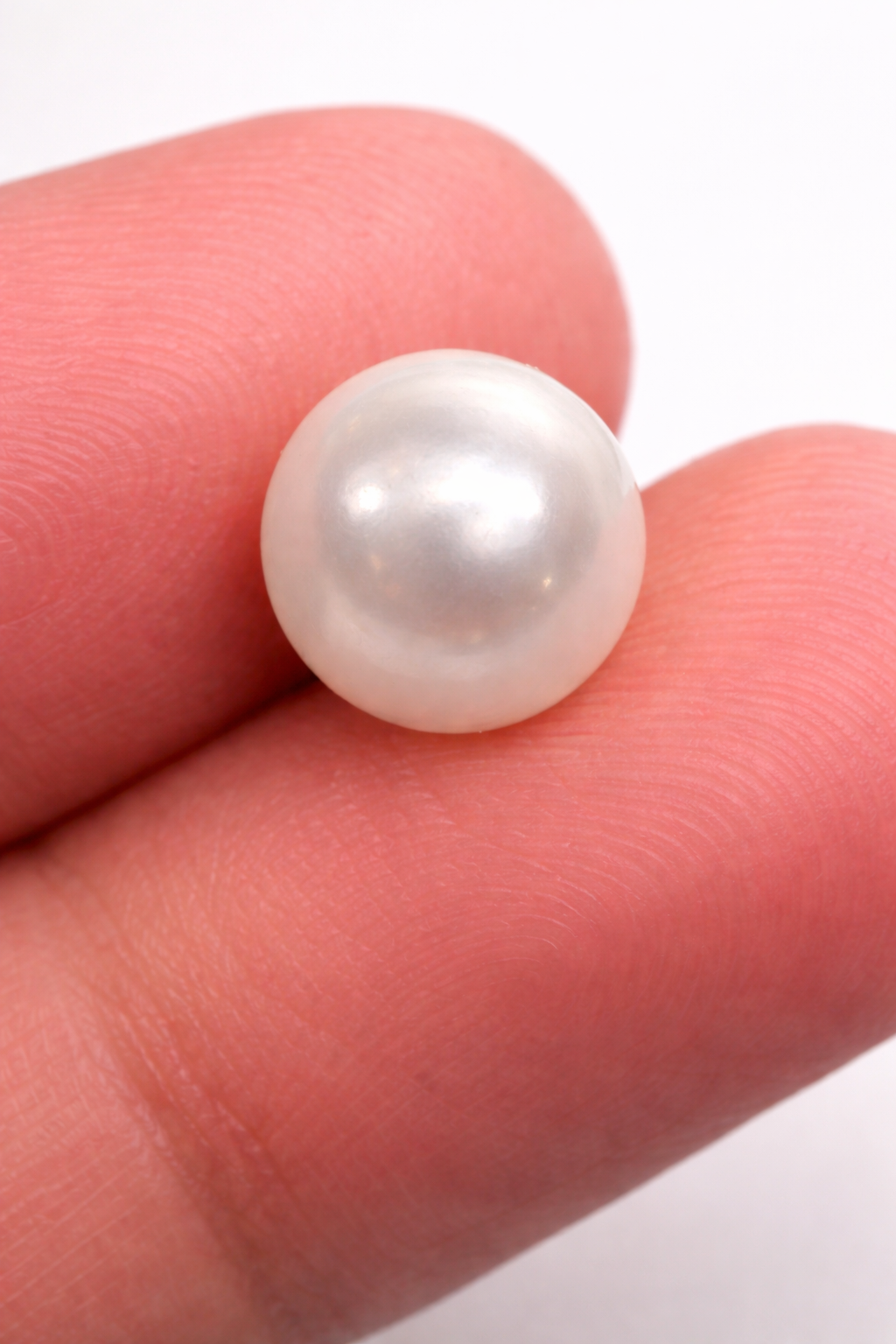
Is a pearl a gemstone? Yes — but an unusual one. Unlike ruby, emerald, or sapphire, which form as minerals deep in the earth, a pearl is organic: it forms inside a living mollusk (an oyster or mussel), not in rock. That makes it one of only a handful of gemstones produced by a living creature rather than mined from the ground.
A natural pearl gemstone forms when a foreign particle — a grain of sand, a parasite, tiny debris — enters the mollusk by accident. To protect itself, the mollusk coats the irritant in layer after layer of nacre (mother-of-pearl), a smooth, iridescent substance made mostly of calcium carbonate. Over years, those layers build into a pearl.
This is the detail that matters most for buyers: a natural pearl forms entirely by chance, with zero human involvement. That’s what separates it from the cultured pearls that make up over 95% of what’s sold worldwide today.
Natural Pearl Gemstone Properties
| Property | Value |
|---|---|
| Chemical composition | Calcium carbonate (aragonite) + conchiolin |
| Mohs hardness | 2.5 – 4.5 |
| Refractive index | 1.52 – 1.66 |
| Specific gravity | 2.60 – 2.85 |
| Diaphaneity | Translucent to opaque |
| Origin | Organic (formed inside a living mollusk) |
| Urdu name | Moti (موتی); rare natural variety also called Sucha Moti |
Natural Pearl vs. Cultured Pearl: The Real Difference
This is the single most-searched comparison around pearls, and the one most local sellers gloss over. Here’s the honest breakdown:
| Natural Pearl | Cultured Pearl | |
|---|---|---|
| How it forms | Accidental — no human involvement | Human-nucleated — a bead or tissue is deliberately inserted |
| Rarity | Extremely rare; fewer than 1 in several thousand wild oysters produce one | Farmed at scale; widely available |
| Nacre thickness | Solid nacre throughout | Often a nucleus bead with a thinner nacre coating |
| Price | Significantly higher, especially for larger sizes | More affordable, wide price range |
| Identification | Requires X-ray or gemological testing to confirm with certainty | Visual/structural cues plus certification |
| Market availability today | Rare finds, mostly antique or Gulf-sourced (Basra pearls) | Standard for nearly all pearl jewelry sold today |
Are pearls real gemstones even though they’re cultured? Yes — cultured pearls are still genuine, organic gemstones. The mollusk does the same natural nacre-building process either way; the only difference is what triggered it. “Cultured” is not the same as “fake” or “imitation” — a plastic or glass pearl imitation is a separate category entirely, and one worth knowing how to rule out (see the identification section below).
Types of Natural Pearls
- Saltwater natural pearls — formed in ocean-dwelling oysters, historically sourced from the Persian Gulf (Basra pearls, prized across South Asia and the Middle East for centuries) and the waters around Sri Lanka and the Gulf of Mannar
- Freshwater natural pearls — formed in river and lake mussels; historically rarer in commercial trade than their cultured freshwater counterparts today
- Baroque natural pearls — irregularly shaped rather than perfectly round, often prized specifically for their uniqueness in older jewelry pieces
Moti Stone Benefits: What Tradition Says
Moti (pearl) holds a genuine place in Islamic and South Asian tradition, and it’s worth covering honestly rather than either ignoring it or overstating it as medical fact.
Pearls are referenced in the Quran as a description of the rewards of Paradise — companions and blessings are likened to “well-guarded pearls” (lu’lu’ maknoon) in more than one verse, and pearls are named among the adornments of Jannah. This is a recognized part of why Moti carries spiritual weight for many Muslim buyers in Pakistan, distinct from — and predating — the astrological framing common in other regional traditions.
Beyond that, many customers ask us about Moti’s traditional associations with calmness, emotional balance, and clarity of mind. We want to be upfront: these are cultural and traditional beliefs passed down across generations, not medical or scientific claims. If you’re drawn to Moti for its spiritual and cultural meaning or its natural beauty, we’re glad to help either way — with honest expectations from the start.
How to Identify a Genuine Natural Pearl Gemstone
Fake and cultured-sold-as-natural pearls are common in local markets. Basic checks before you buy:
- Tooth test: Gently rub the pearl against your front teeth. A genuine pearl (natural or cultured) feels slightly gritty; glass or plastic imitations feel perfectly smooth.
- Weight: Real pearls feel noticeably heavier than plastic imitations of the same size.
- Surface: Genuine pearls show tiny natural irregularities under magnification; imitations are usually too perfectly uniform.
- Drill-hole check: On a genuine pearl, the nacre layering is visible at the drill hole under magnification; imitation pearls show a uniform coating over a plain bead core.
- Certification: The only way to confirm natural origin (versus cultured) with certainty is lab testing — X-ray or gemological microradiography. Ask for certification whenever you’re paying a natural-pearl price.
What we do at Pearl Gems Pakistan: every pearl we sell is disclosed honestly as natural or cultured, with certification available on request — no pearl is sold as “natural” without the testing to back it.
Natural Pearl Gemstone Price in Pakistan
Pearl pricing varies enormously based on origin, size, luster, and — most importantly — whether it’s natural or cultured. Typical ranges we see in the Pakistani market:
| Pearl Type | Price Range (PKR) |
|---|---|
| Cultured freshwater pearl (loose, per piece) | 500 – 3,000 |
| Cultured Akoya/saltwater pearl | 3,000 – 15,000 |
| Natural pearl (small, unverified) | 15,000 – 50,000+ |
| Natural Basra pearl (certified, larger) | 100,000 – 1,000,000+ |
Prices fluctuate with size, luster, and market conditions — contact Pearl Gems Pakistan directly for current rates on a specific piece.
Caring for Your Natural Pearl Gemstone
Pearls are softer and more delicate than most gemstones (Mohs 2.5–4.5), so they need gentler handling:
- Cleaning: Wipe with a soft, damp cloth after wearing. Never use ultrasonic cleaners, steam, or harsh chemicals.
- Storage: Keep separate from harder gemstones that can scratch the nacre. A soft pouch or lined box is best.
- Wearing: Put pearls on after applying perfume, hairspray, and makeup — these chemicals dull the nacre’s luster over time.
- Avoid: Direct sunlight for long periods and extreme temperature changes, both of which can cause the nacre to dry out or crack.
Frequently Asked Questions
Is a pearl a gemstone?
Yes. Despite forming inside a living organism rather than through geological processes, pearls are classified as organic gemstones and have been treasured as such for thousands of years.
What is a pearl made of?
Primarily calcium carbonate in the form of aragonite, layered with a protein called conchiolin, together forming nacre.
What’s the difference between natural and cultured pearls?
Natural pearls form entirely by chance with no human involvement; cultured pearls form after a bead or tissue is deliberately inserted into the mollusk. Both are genuine, organic pearls.
Are natural pearls still available to buy today?
Yes, though they’re rare and significantly more expensive than cultured pearls. Most are either antique pieces or newly found Gulf-region (Basra) pearls, and should always come with certification.
Is Moti mentioned in Islam?
Yes — pearls are referenced in the Quran as part of the description of Paradise’s rewards, which is part of why Moti holds particular significance for many Muslim buyers.
How can I tell if my pearl is real?
Use the tooth test and weight check for a first impression, but the only certain way to confirm natural (versus cultured) origin is lab certification.