
If you have been searching for the labradorite stone price in Pakistan, you have probably noticed how much the value can swing from one stone to the next. Two labradorite pieces of the exact same size can be priced completely differently depending on their flash quality — and that confuses a lot of first-time buyers. At Pearl Gems Pakistan, we get asked about labradorite pricing, authenticity, and spiritual meaning almost every week, from collectors in Karachi to meditation practitioners in Lahore and Islamabad.
This guide breaks down everything you need before buying: current labradorite stone price in Pakistan by quality grade, what labradorite stone benefits are believed to offer, what labradorite is called in Urdu, how to spot a genuine stone, and how to care for one once it is in your collection.
What Is Labradorite Stone?
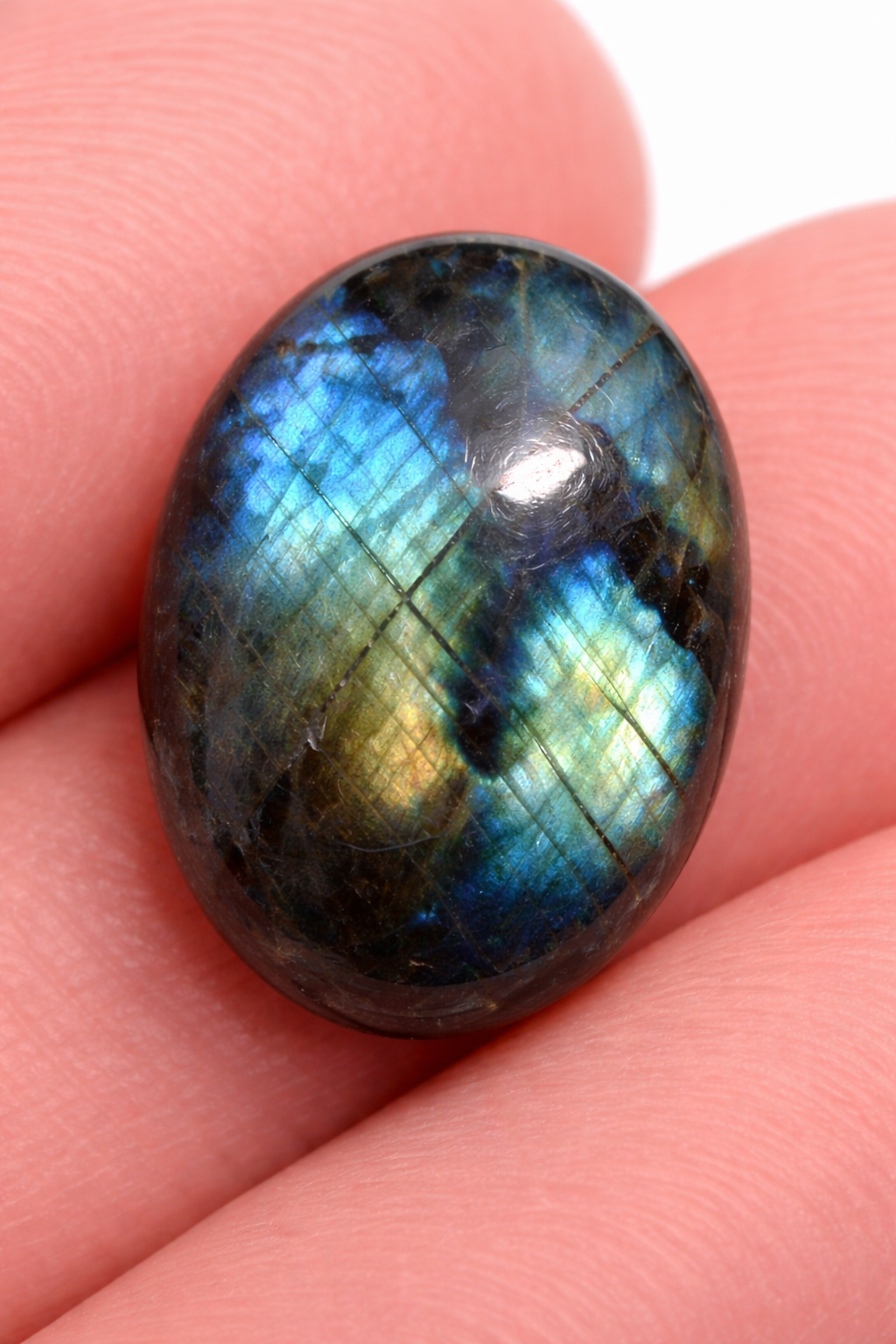
Labradorite is a feldspar mineral, part of the plagioclase family, best known for a striking optical effect called labradorescence — flashes of blue, green, gold, and occasionally purple that seem to move across the stone as it catches the light. This isn’t a surface coating or dye; the color comes from microscopic internal layers that formed as the mineral cooled slowly over millions of years, causing light to bend and interfere the same way it does in a soap bubble or an oil slick.
Because of this effect, a labradorite gemstone is almost always cut as a smooth, domed cabochon rather than faceted like a transparent stone — the rounded shape lets the internal flash show through properly. The base color of raw labradorite is typically dark gray to black, which is exactly what makes the color flash stand out so dramatically.
Labradorite Stone Meaning and Spiritual Significance
Labradorite has earned the nickname “Stone of Magic” in crystal circles, largely thanks to an old Inuit legend from Labrador, Canada, where the stone was first identified. According to the story, a warrior struck the coastal rocks with his spear and freed the trapped light of the aurora borealis — most of it escaped into the sky, but a portion stayed behind in the stone, which is why labradorite is said to still carry a trace of the Northern Lights.
In modern crystal traditions, labradorite is associated with the Third Eye and Crown chakras and is believed to support intuition, protection, and transformation during periods of change. It’s worth being upfront here: these are traditional and metaphysical beliefs rather than medical claims, and labradorite should complement — not replace — professional healthcare or advice.
Labradorite Stone Benefits People Look For
When people ask about labradorite stone benefits, they’re usually asking about one or more of the following traditional associations:
- Emotional balance — believed to ease anxiety, mood swings, and stress
- Protection — thought to shield the aura from negative energy during meditation or spiritual work
- Intuition and clarity — associated with sharper decision-making and mental focus
- Creativity — popular among artists and writers as a support for imagination
- Transformation — worn during major life changes such as a new job, move, or relationship shift
Different flash colors are said to lean into slightly different qualities — blue flash toward calm and communication, green flash toward heart-centered healing, gold flash toward confidence and abundance. None of this is scientifically verified, but it’s part of why labradorite has become such a popular everyday wear stone rather than an occasional-use gem.
Labradorite Stone in Urdu
Labradorite doesn’t have a traditional South Asian name the way Neelam (blue sapphire) or Pukhraj (yellow sapphire) do, since it’s a relatively recent addition to the Pakistani gemstone market. It’s typically written and pronounced simply as لیبریڈورائیٹ (labradorite) in Urdu, and searched for in roman Urdu as “labradorite stone” or “labradorite ka faida” (labradorite’s benefit). Despite not having deep roots in South Asian gem-astrology the way ruby or emerald do, its popularity has grown quickly among Pakistani collectors and spiritual seekers who value it for meditation, protection, and its striking appearance in silver jewelry.
Labradorite Stone Price in Pakistan
This is usually the first question buyers actually want answered. Labradorite pricing depends heavily on the quality of the flash — its intensity, coverage, and number of colors — far more than on size alone. A small stone with a vivid, multi-colored flash is worth considerably more than a larger stone with a dull, single-color flash.
Loose Stone Prices (Per Carat)
| Quality Grade | Price Range (PKR/carat) | What You’re Getting |
|---|---|---|
| AAA (Top Quality) | 3,500 – 8,000+ | Intense multi-color flash, 75%+ surface coverage, dark base |
| AA (Good Quality) | 1,800 – 3,500 | Strong flash, 2–3 colors, 50–75% coverage |
| A (Commercial) | 800 – 1,800 | Moderate flash, 1–2 colors, 25–50% coverage |
| B (Low Grade) | 300 – 800 | Minimal flash, under 25% coverage |
Labradorite Jewelry Price in Pakistan
| Jewelry Type | Price Range (PKR) |
|---|---|
| Labradorite Pendant (Silver) | 5,000 – 15,000 |
| Labradorite Ring (Silver) | 6,000 – 18,000 |
| Labradorite Earrings (Silver) | 7,000 – 20,000 |
| Labradorite Bracelet | 4,000 – 12,000 |
| Labradorite Ring (Gold) | 25,000 – 80,000+ |
Prices are approximate and reflect the local Pakistani market; international per-carat prices for high-grade labradorite (especially Finnish spectrolite) can run considerably higher.
What Affects Labradorite Stone Price
If you’re comparing two stones and wondering why one costs more, these are the factors doing the work:
- Flash intensity and coverage — the single biggest price driver
- Color range — multi-colored stones (blue + green + gold) outprice single-color flash
- Base color — dark gray to black bases give better contrast and command higher prices
- Size — larger stones are rarer, but only when flash quality holds up at that size
- Origin — Finnish spectrolite and Madagascar material are generally considered premium sources
- Cut and polish quality — a well-oriented cabochon shows off the flash properly; a poor cut hides it
How to Identify a Genuine Labradorite Stone
Because labradorite has become popular, imitations (glass, dyed stone, or resin) have started showing up in the market. A few quick checks before buying:
- Depth of flash — genuine labradorescence appears to come from inside the stone and shifts as you rotate it; painted or glass imitations show flash sitting flat on the surface
- Temperature — real labradorite feels cool to the touch initially; plastic/resin imitations feel warm right away
- Weight — labradorite has a specific gravity of 2.68–2.74, giving it a noticeably solid feel for its size
- Natural variation — genuine stones show uneven, organic flash distribution; perfectly uniform color across the whole surface is a red flag
Buying from a dealer who grades and certifies each stone removes most of this guesswork — every labradorite stone sold through our labradorite collection at Pearl Gems Pakistan is graded for flash quality and guaranteed natural and untreated.
Labradorite Stone Jewelry Options
Labradorite is most commonly set in silver, which enhances its cool blue and green flashes, though gold settings pair beautifully with warmer gold and orange flash tones. Popular formats in the Pakistani market include:
- Pendants — keep the stone near the heart and throat, popular for daily wear and meditation
- Rings — constant skin contact, though a protective setting is recommended given labradorite’s moderate hardness
- Earrings — brings the stone’s flash close to the face
- Bracelets — one of the most popular formats for everyday protection wear
If you’re choosing a setting, our ring buying guide covers how to pick the right band and setting for a moderate-hardness stone like labradorite, and our birthstone guide is worth a look if you’re pairing labradorite with a traditional birthstone piece.
Labradorite Stone Care and Cleaning
Labradorite sits at 6–6.5 on the Mohs hardness scale, which means it needs a bit more care than harder gems like sapphire or ruby:
- Wipe with a soft, dry cloth after wearing
- Clean with lukewarm water and mild soap only when necessary — avoid prolonged soaking
- Never use ultrasonic or steam cleaners
- Store separately from harder stones that could scratch the surface
- Avoid prolonged direct sunlight, which can dull the flash over time
For a broader rundown on looking after different stone types in your collection, our gemstone care guide covers cleaning and storage for the full range of gems we carry.
Frequently Asked Questions
What is the labradorite stone price in Pakistan? Loose labradorite stones typically range from PKR 300 to PKR 8,000+ per carat depending on flash quality, while finished silver jewelry ranges from roughly PKR 4,000 to PKR 20,000.
What are the main labradorite stone benefits? Labradorite is traditionally associated with protection, emotional balance, intuition, and support during periods of personal transformation. These are metaphysical beliefs rather than medical claims.
What is labradorite called in Urdu? There’s no distinct traditional Urdu name — it’s referred to directly as لیبریڈورائیٹ (labradorite), since it’s a relatively recent addition to the Pakistani gemstone market compared to stones like Neelam or Pukhraj.
Can labradorite be worn every day? Yes, but choose a protective setting for rings given its moderate hardness (6–6.5), and remove it during heavy manual work or sports.
How can I tell if my labradorite is genuine? Check for flash that appears to come from inside the stone and shifts as you rotate it, a cool initial touch, and natural, uneven color distribution rather than a perfectly uniform flash.
Is labradorite suitable as a gift? Yes — its striking appearance and protective, transformative associations make it a popular gift for milestones, new beginnings, or anyone drawn to meditation and spiritual practice.