
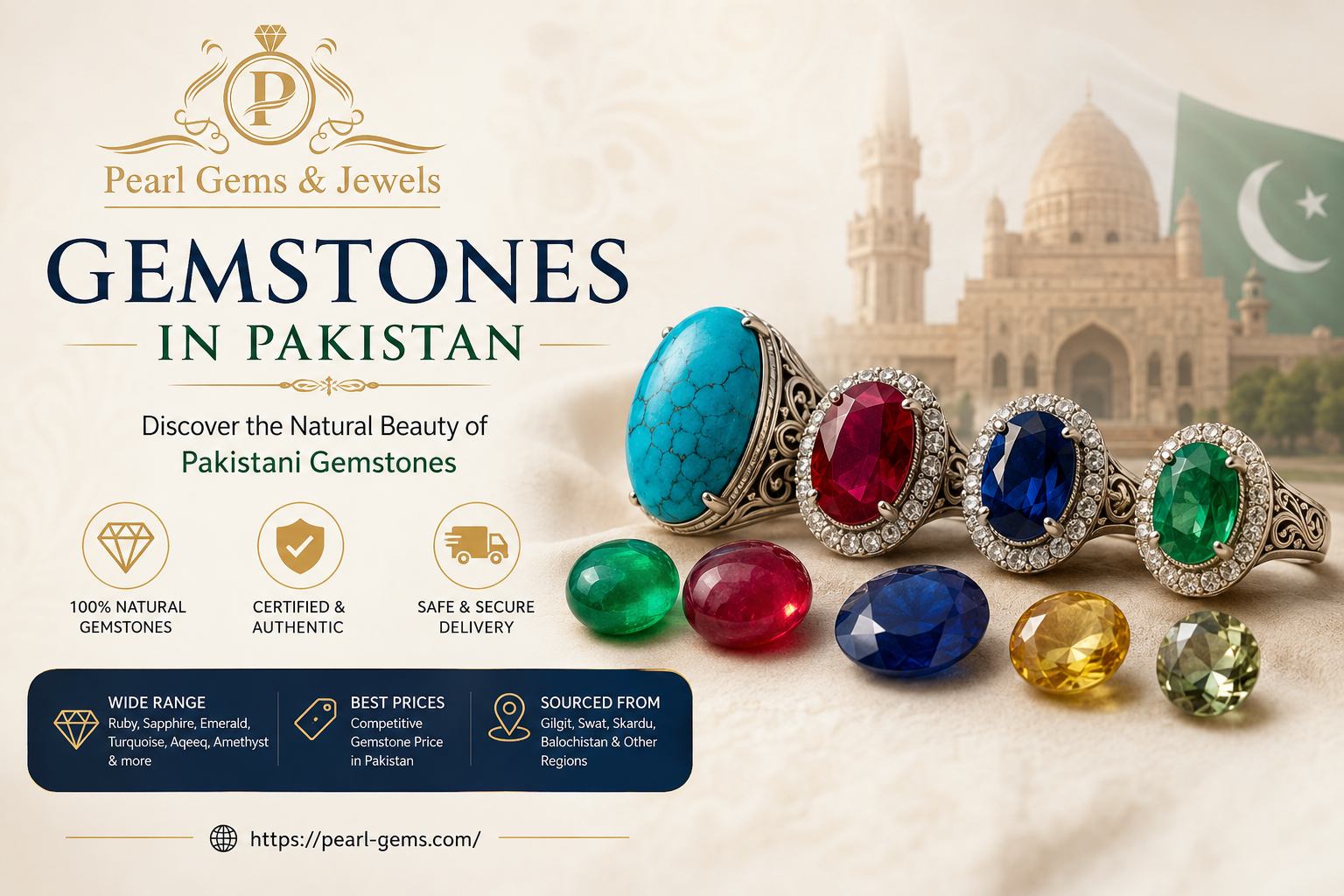
If you’ve ever held a deep green emerald from Swat, a vivid ruby from Hunza, or a sky-blue aquamarine from the Shigar Valley, you already know what the rest of the world is slowly waking up to: Pakistan is one of the richest gemstone nations on Earth.
Pakistan ranks among the top five countries globally in terms of untapped gemstone reserves. Its three mighty mountain ranges — the Hindu Kush, the Himalayas, and the Karakoram — stretch across Khyber Pakhtunkhwa, Gilgit-Baltistan, Azad Kashmir, and Balochistan, creating a geological environment unlike anywhere else. Experts estimate that 95% of Pakistan’s gemstone-bearing land remains unexplored, and new finds keep emerging from these ranges every year.
Whether you’re a passionate collector, a first-time buyer, or someone looking to invest in something tangible and beautiful, understanding gemstones in Pakistan — what’s out there, what it costs, and how to buy it safely — is the first step toward a confident purchase.
Top Gemstones Found in Pakistan
Let’s take a tour of Pakistan’s most celebrated gemstones — where they come from, what makes them special, and why collectors love them.
1. Emerald (Zamurd) — Swat Valley, Khyber Pakhtunkhwa
The Swat Valley emerald is arguably Pakistan’s most famous gemstone export. Found in the talc-carbonate schist of northeastern Swat, these stones range from pale green to rich forest green. Swat holds an estimated 70 million carats in emerald reserves — one of the largest deposits in Asia — and competes closely with Colombian and Zambian emeralds in quality.
2. Ruby (Yaqoot) — Hunza Valley & Neelum Valley
The Hunza Valley in Gilgit-Baltistan yields beautifully formed pink-to-red ruby crystals from marble-enclosed corundum deposits. Neelum Valley in Azad Kashmir produces high-quality rubies that rival the legendary rubies of Myanmar in richness and clarity. Per-carat prices for Pakistani rubies range from Rs. 10,000 to Rs. 500,000, reflecting the huge variation in clarity, saturation, and cut.
3. Sapphire (Neelam) — Gilgit-Baltistan & Kashmir
Blue sapphires from Pakistan’s Gilgit-Baltistan region and Kashmir hold a special place in global gem markets. The Nangimali, Batakundi, and Basil mines in Azad & Jammu Kashmir are well-known sources, prized for a rich, velvety blue that many gemologists consider among the finest in the world.
4. Aquamarine — Nagar, Shigar & Skardu, Gilgit-Baltistan
The Nagar and Shigar valleys produce breathtaking pale-to-deep blue aquamarine of exceptional transparency. In 2019, the discovery of the “King of Kashmir” — a spectacular large aquamarine from the Biangsapi Gon mine at Goyungo — put global attention on this region’s deposits.
5. Topaz — Katlang, Mardan District
The Katlang mine in Mardan District is renowned worldwide for baby pink and purplish-pink topaz, a variety of imperial topaz, with an estimated 9 million carats in reserves.
6. Peridot — Kohistan, Khyber Pakhtunkhwa
Kohistan peridot has established itself firmly in international gem markets, with 10 million carats in documented reserves. The vivid olive-to-lime green of these stones is genuinely eye-catching.
7. Turquoise (Feroza) — Balochistan
Balochistan yields turquoise in shades from sky-blue to blue-green. Feroza holds deep cultural significance in South Asian tradition and is consistently in demand for both jewellery and spiritual purposes.
Looking for something rarer?
Beyond these well-known names, Pakistan also produces genuine collector rarities — Hunza spinel, Shigar Valley triplite, and väyrynenite among them. We cover these hidden treasures, where to find them, and what they’re worth in our dedicated rare gemstones Pakistan guide.
Gemstone Price List Pakistan 2026
One of the most common questions we get is: “How much does a gemstone cost in Pakistan?” The honest answer: it depends on origin, weight, color saturation, clarity, treatment status, and cut. Here are current market ranges to use as a starting point — prices fluctuate with global demand and the USD/PKR rate, so confirm current rates directly before buying.
| Gemstone | Estimated Price Range (per carat) | Key Value Factors |
|---|---|---|
| Emerald (Swat) | Rs. 5,000 – Rs. 150,000+ | Depth of green, clarity, no treatment |
| Ruby (Hunza/Neelum) | Rs. 10,000 – Rs. 500,000 | Color saturation, crystal clarity, origin |
| Blue Sapphire (Kashmir) | Rs. 8,000 – Rs. 200,000+ | Velvety blue hue, natural, unheated |
| Aquamarine (Shigar) | Rs. 2,000 – Rs. 40,000 | Transparency, size, depth of blue |
| Pink Topaz (Katlang) | Rs. 3,000 – Rs. 50,000 | Pink intensity, clarity, origin certification |
| Peridot (Kohistan) | Rs. 500 – Rs. 10,000 | Vivid green, eye-clean clarity |
| Turquoise (Feroza) | Rs. 500 – Rs. 15,000 | Color evenness, no matrix, hardness |
| Spinel (Hunza) | Rs. 5,000 – Rs. 80,000 | Red/pink intensity, natural, unheated |
| Tourmaline (Beyroj) | Rs. 1,000 – Rs. 30,000 | Color variety, saturation, transparency |
Note: Prices reflect estimated retail ranges for natural, certified stones as of 2026. Fine, certified, untreated specimens command premium prices — always request full disclosure of any treatments.
At the top of this range, fine unheated ruby and Kashmir-belt sapphire are typically the most expensive gemstones in Pakistan per carat, with exceptional Swat emeralds close behind — see the FAQ below for more on this.
What drives price the most? Three things, consistently: natural (untreated) status, carat weight above 1 ct, and certification from a recognized gem lab.
Buying online?
Online gemstone shopping has expanded access across Lahore, Karachi, Islamabad, and beyond — but it comes with real risk if you don’t know what to check. Our guide on buying gemstones online in Pakistan walks through certificates, photo/video verification, treatment disclosure, and return policies before you pay.
How to tell if a Pakistani gemstone is genuine
Two stones that look identical to the naked eye can differ enormously in value — and the only reliable way to tell them apart is testing and certification. We’ve put together a full breakdown of the loupe, refractive index, hardness, and thermal tests that separate asli pathar from fakes, plus which Pakistani gemstones get counterfeited most often, in our original gemstone Pakistan authenticity guide.
FAQ: Your Questions About Gemstones in Pakistan Answered
Q: Which is the most expensive gemstone in Pakistan? Fine, unheated ruby from Hunza and Neelum Valley and unheated Kashmir-belt sapphire consistently command the highest per-carat prices in Pakistan’s market — up to Rs. 500,000+ per carat for exceptional, certified specimens. Fine Swat emeralds of strong color and clarity also reach serious collector prices.
Q: Are Pakistani gemstones treated or enhanced? It varies by stone and seller. Some are sold fully natural and untreated, which commands a premium. Others undergo standard enhancements like heat treatment. The key is full disclosure — always ask for a complete treatment history backed by lab certification.
Q: Can I buy certified gemstones online in Pakistan with home delivery? Yes. Several reputable platforms, including Pearl-Gems.com, offer certified gemstones with delivery across Pakistan. Look for sellers who provide lab certificates, actual stone photos/videos, clear return policies, and transparent treatment disclosure — see our full online buying guide for the complete checklist.
Q: What is a good starting gemstone for a new Pakistani collector? Peridot from Kohistan or aquamarine from Gilgit-Baltistan are excellent entry points — genuinely Pakistani and available at accessible price points. As your knowledge grows, pink topaz, ruby, or sapphire become a natural progression.
Q: What is the best place to buy gemstones in person in Pakistan? Peshawar’s Namak Mandi market is the country’s most established gemstone hub, operating since 1980. Skardu’s Rundu Gems Market is the go-to for rough specimens and aquamarines, and the Sheraz Center in Swat focuses on emeralds. For certified retail, PGJDC-associated dealers in Lahore and Karachi offer reliable, vetted options.
Ready to Start or Grow Your Gemstone Collection?
Pakistan sits on a treasure trove the world is only beginning to fully appreciate. Whether you’re drawn to the forest-green of a Swat emerald, the fiery red of a Hunza ruby, or the icy calm of a Shigar aquamarine — there’s a Pakistani gemstone waiting for you.
-
🔍 Browse our collection of certified, natural gemstones sourced directly from Pakistani mines
-
💎 Read next: rare gemstones in Pakistan, buying online safely, or how to spot a fake
-
💬 Contact our team if you have questions about a specific stone, origin, certification, or investment potential